
Why Esperanto as a world language matters more than ever
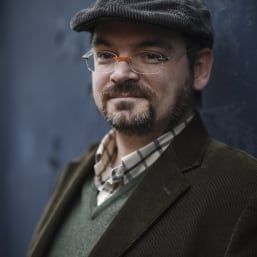
Esperanto can offer a surprising alternative in a world where English and technology increasingly shape international communication, argues Federico Gobbo. The language can contribute to a more equal way of communicating and encourage us to rethink the relationship between language, culture and power.

The times we live in are paradoxical. On the one hand, globalisation and the American way of life have spread worldwide, and English is its herald. There's no question it is the de facto global language. Whether you're in business, entertainment, or science, English is a must everywhere. And where English doesn't arrive, language technologies such as machine translation and generative AI come in to help. They allow fast and often reliable translations, letting people communicate almost effortlessly in languages I don’t know. If I need information in Prague I can use my phone and have a conversation in Czech with a local, without knowing a word of the other’s language.
Languages under pressure
We see the result at the UvA directly: the study of all languages other than English and Dutch is under constant pressure, as the number of students choosing to learn languages is dropping dramatically. Voices defending Dutch against excessive anglicisation at the UvA are just another aspect of the ‘language crisis’ at the UvA and in society as a whole. At first glance, all of this seems like a natural flow of events, inevitable and unstoppable.
On the other hand, many people seem to be lost in their lives. They are not sure how to express themselves or find their purpose in a world that seems to have lost any form of rationality, a world in which stand-up comedians lose their jobs as politicians behave like their satirical counterparts in comedy, or even comedians become politicians. What really matters in what I am doing? If I am a student, what am I studying? If I am a faculty member, what am I teaching? What about my research?
I argue that the English-led way of life, aided by technologies, and the sense of being lost in life are two sides of the same coin. And that this is not natural at all, but just the product of performing the sociopolitical rituals every person silently and automatically does every day, without questioning. It is what Václav Havel called “living within a lie,” as Mark Carney, Prime Minister of Canada, recently reminded all of us at Davos.
The key to getting beyond this impasse is exploring a new way of being a citizen of the world that does not pass through English. From a postcolonial perspective, it is obvious that English—as well as French, German, Italian, Portuguese, or Spanish—is not neutral, having spread through the forces of colonisation. Choosing not to use English as one of the languages we know, so as to decolonise the mind, as famously argued by Ngũgĩ wa Thiong'o, is a hard and radical choice. Inspired by Thiong’o’s book, in my university student years in the 1990s, I ran an experiment on myself: I decided not to speak, read, write, or listen to English for nearly a semester, to prove concretely what could happen to my mind.
I had just started learning Esperanto in a university course devoted to the language and, more in general, to interlinguistics, the science of language construction. The space left free from English could be filled, at least partially, by Esperanto. I started forming a new network of international acquaintances and friends in that language, which let me live an alternative way of being a citizen of the world. For sure, I missed access to many written resources, especially for my studies, that I couldn't access in translation, but I tried to find different perspectives in other languages. Some of my new Esperanto friends, who came from different parts of Europe and the world, pointed out studies in their languages that I didn't know about, which gave me different perspectives. As a humanities student then, especially in communication sciences, approaching the same issue from a new point of view was immensely rewarding.
Universities are places where students—as well as faculty members—are invited to open their minds and imagine new possibilities for the world to come. There is more to international behaviour than the law of the jungle. Learning a new language rewires your brain, cognitive scientists have taught us. Unlike all other living languages, Esperanto is not bound to a national tradition or a specific country. Although it originates in Europe, it did not take part in colonisation; on the contrary, its starting point is that every human being should speak on equal footing, and nobody should humiliate themselves by speaking the language of another people, which puts the speaker in an inferior position a priori. Furthermore, Esperanto was designed to accomplish this purpose by speeding up the acquisition of the basic rules so people could become active users of the language in weeks or months, instead of years.
Esperantist
When I speak Esperanto, my passport matters little. Let me explain. When I speak English, I am the Italian guy living in Amsterdam. When I speak Esperanto, I am an Esperantist living in the Netherlands. I do not lose my passport in Esperanto, but I do not have to show it, metaphorically speaking, every time I open my mouth and utter a sentence.
But there is more. The way we approach any sensitive topic in language—and, consequently, culture—changes radically. Speaking Esperanto made me aware of how much phrases, word turns, and ways of reasoning, are linked to languages, and ultimately shape how we reason about things. I argue that talking about postcolonialism in English, although necessary, is eventually flawed, because English is a colonial language.
The UvA is at the vanguard, offering a course in Esperanto. Now it is time to put Esperanto to work for a wider scope, discussing sensitive topics related to language, society, and justice directly in Esperanto. This is the only way to prove concretely that the language of research and study matters to our understanding of the subject. In fact, among the plethora of constructed languages proposed since the nineteenth century, only Esperanto is mature enough to offer a worldwide community of speakers, with history, literature, and vocabulary, to do that.
Federico Gobbo is Professor of Interlinguistics and Esperanto. On Thursday, 15 October, he is hosting an evening at Spui25 entitled ‘Language for an Alternative World Order’. Reservations can be made via this link.