Open letter: “Replace UNL internationalisation plans with genuine self-direction”
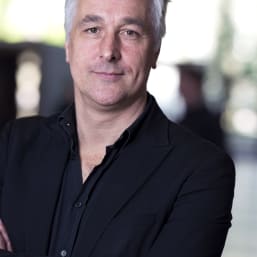
The current plans for self-regulation by UNL are “counterproductive” and overshoot their mark, states UvA director Ingmar Visser in an open letter to the informateur. Visser, supported by a broad coalition of unions and faculties, pleads for the use of existing instruments such as a separate numerus fixus instead of hard cutbacks.

Dear informateur, dear Prof. Dr. Letschert, forming parties, (cc. UNL),
As part of the implementation of the Internationalisation in Balance Act (WIB), Universities of the Netherlands (UNL) has made a proposal for “self-direction”. This proposal hits a number of degree programs very hard and will lead to painful and unnecessary cutbacks and reorganizations at the departments concerned. The damage to the reputation of Dutch science will be great, while science, including international students, is desperately needed to boost innovation in the Netherlands. That is clearly set out in countless reports, including recently the Wennink report.
The original Dutch version of this open letter was already published on ScienceGuide on Thursday. In consultation with the editors of ScienceGuide, Folia is also publishing the letter today.
The editors of ScienceGuide want readers from the University of Amsterdam to be able to take direct note of the content of this letter.
The “self-direction” proposal by UNL did not come about in consultation with the degree programs concerned. As recently emerged in Utrecht, the program there was not even informed about the intention to convert the program entirely to the Dutch language. There is therefore no question of self-direction.
The UNL proposal is, moreover, counterproductive: the unilateral choice for interventions in the Randstad has the undesirable side effect that the stay rate of international students drops. This is not a plea for exceptional positions of individual programs, but a warning against policy logic that cuts selectively and thereby weakens the system as a whole. We request you and the forming parties to replace the “self-direction” of UNL with genuine self-direction. We explain the request further below, and make proposals for genuine self-direction.
Policy goals of self-direction already achieved
Since the UNL proposal for “self-direction”, the policy context has changed fundamentally. Firstly, the main objective of the WIB, namely the decrease in the influx of international students, has meanwhile been achieved. Secondly, the parties that were mainly keen on tightening the WIB and the Test for Foreign-Language Programs, namely NSC, BBB, and PVV, now play no role (anymore) in the formation. Thirdly, thanks to the VVD amendment to the 2024 education budget, it has become possible to set separate caps (numeri fixi) for Dutch-language and English-language tracks.
The separate numerus fixus per language variant is an instrument that universities asked for long ago (many of the programs affected in “self-direction” have already made use of this, or are currently doing so). The deployment of that instrument has had three effects that are becoming visible now and in the coming academic year: a decrease in the influx of international students, an increase in the accessibility of programs for Dutch students, and the strengthening of Dutch as the language of instruction because separate Dutch-language tracks have been set up.
Better use of existing instruments for self-direction
What more is needed then? The main objectives from the WIB—reducing the international influx and increasing accessibility for Dutch-speaking students—can be realized (permanently) in a relatively simple manner by applying the instrument of separate numeri fixi for Dutch-language and English-language tracks. Moreover, considered choices regarding these numbers can be based on societal needs, for example by steering specifically based on shortage sectors in the labor market.
The strengthening of Dutch as the language of instruction, with a view to promoting the connection between universities and societal institutions, can also be further shaped without resorting to the drastic measures proposed in the “self-direction” of UNL.
Strengthening Dutch
Dutch as an administrative language at universities is already the norm. To ensure that international colleagues and international students can move more smoothly in Dutch society, more emphasis on learning Dutch is necessary. There is already much attention for this, and international students are offered the chance to learn Dutch at many programs (without extra costs). In our view, this offer should take on a more mandatory character.
As an additional effect, a strengthening of Dutch among international students leads to an increased stay rate. This can be further promoted by introducing international students to Dutch institutions and companies via internships. A greater emphasis on internships in degree programs also ensures that the educational offering as a whole connects better to the needs of the labor market. A welcome instrument for this is the possibility for differentiation in tuition fees.
Genuine self-direction
The proposed “self-direction” of UNL misses the mark: it intervenes where lighter, more effective, and already available instruments demonstrably achieve the same policy goal. We ask you and the forming parties to replace this “self-direction” of UNL with genuine self-direction: deployment of numeri fixi, steered by labor market needs where useful and necessary, and strengthening of Dutch through Dutch tracks and more mandatory Dutch for international staff and students. More detailed proposals can be found via this link on ScienceGuide.
Where genuine self-direction allows room for steering while maintaining quality, the current UNL “self-direction” leads to unnecessary demolition. We therefore explicitly ask you not to take this proposal as a starting point in the further elaboration of the WIB.
Dr. Ingmar Visser, director of the College of Psychology, University of Amsterdam
This initiative is supported by representatives of scientific, student, and trade union organizations and by many sections, departments, and degree programs at scientific institutions, including:
- Algemene Onderwijsbond (Douwe Dirk van der Zweep, administrator AOB Higher Education and Research)
- Amsterdam Young Academy (Evgenia Lysova & Micha Heilbron)
- ASVA (Sahand Modzbar)
- LSVb (Maaike Krom)
- PsychInAction (Virág Nyisztor, Dr. Eva Billen)
- WOinActie (Prof. Dr. Rens Bod)
- UvA College of Psychology (Dr. Ingmar Visser)
- UvA Psychology Research Institute (Prof. Dr. Frenk van Harreveld)
- UvA Department of Psychology (Prof. Dr. Merel Kindt)
- UvA Graduate School of Psychology (Prof. Dr. Edwin van Hooft)
- UvA Faculty Student Council, Faculty of Social & Behavioural Sciences (Carlos Fitton Gomez)
And various departments and institutes of Erasmus University Rotterdam, Leiden University, Utrecht University, and Vrije Universiteit Amsterdam.