What has the UvA achieved after ten years of diversity policy?

Exactly ten years after the publication of the report Let’s Do Diversity, the UvA will next week mark a decade of diversity policy. Comparing the 2016 report with today’s policies shows that many of its recommendations have been followed, but also that the reality has often proved more stubborn.

The UvA is marking ten years of diversity policy this week. It is therefore exactly ten years since the Let’s Do Diversity report, produced under the leadership of Gloria Wekker, was presented in the aftermath of the 2015 Maagdenhuis occupations. What has actually come of the recommendations in that report?
Diversity Unit
A considerable number of the recommendations have been adopted by the UvA, although sometimes in a different or less enforceable form. A good example is how the UvA has put what was perhaps the report’s most important recommendation into practice. Wekker argued that introducing a Diversity Unit responsible for coordinating and implementing diversity policy was essential. And in a sense, such a unit was indeed established, when the UvA set up the Central Diversity Office as early as 2016.
Yet the precise role of this body differs from what the diversity committee had envisaged at the time. In its current form, the Central Diversity Office is explicitly not responsible for implementation, but instead has a more agenda-setting role. “Neither the Central Diversity Officer nor the Faculty Diversity Officers make policy,” its own website states.
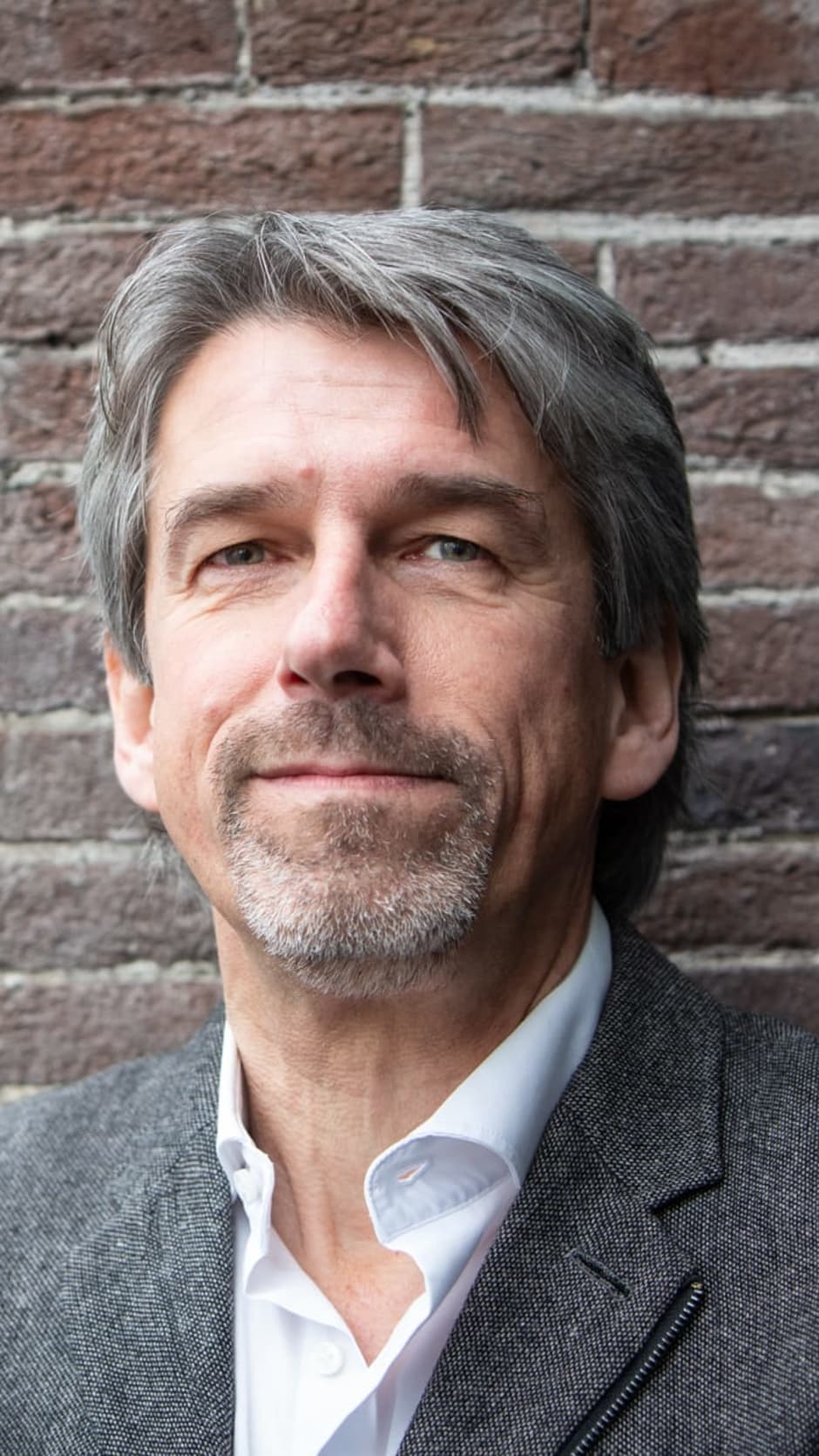
The fact that this limits the office’s ability to act decisively is acknowledged by current Central Diversity Officer Machiel Keestra. “But the fact that I am not directly part of a department responsible for making policy also means that I am able to cut across the hierarchy. In my agenda-setting role, I don’t have to be constrained by the practical considerations at play within the various policy departments.” According to Keestra, the Diversity Office also works closely with bodies that do have decision-making powers, such as the participation bodies, in order to have an impact nonetheless.
Quotas
Yet the limited powers of the diversity officers do appear to be part of a broader pattern, in which policy has become less enforceable in practice than was recommended ten years ago. The Wekker committee not only called for diversity ambitions, but also for concrete and ultimately binding targets. These included quotas for gender and ethnic diversity. The UvA has since introduced certain diversity targets, such as a target for the proportion of female professors, but binding quotas were already a contentious issue at the time of the report and, in practice, have never been introduced. Not even now, with faculties such as FNWI and FEB lagging behind the rest of the university in terms of gender equality.
Nevertheless, Keestra says it is not entirely out of the question that such “draconian measures” could in theory one day be used. “Quotas are a tricky subject. They can quickly come to dominate the discussion and lead to polarisation. So they’re not something you just reach for. But we do see, for example, that TU Eindhoven is experimenting with more far-reaching measures when it becomes clear after several years that earlier measures have not had sufficient effect. In such a case, quotas could, as a temporary measure, contribute to a fair solution.”
Tackling discrimination
Another major theme in the report was tackling discrimination and inappropriate behaviour. One of the committee’s key demands was that the UvA should “take racism and discrimination more seriously and speak out against it more explicitly”. The fact that the university has taken this recommendation on board is evident from the many bodies and structures that have been established since, where students and staff can raise concerns about inappropriate behaviour.
For example, an ombudsperson has been appointed, independent confidential advisers are available to students, and in 2025 the Reporting Point for Social Safety and Integrity was established. The infrastructure for reporting inappropriate behaviour has therefore undeniably been expanded, in line with the recommendations in the report. But has it actually made a difference? The 2025 Student Social Safety Monitor found that most forms of inappropriate behaviour had actually increased. In 2018/19, for example, 6.5 per cent of respondents said they had experienced discrimination, compared with 13.2 per cent in 2024/25.
When it comes to tackling discrimination, not all of the report’s recommendations were adopted either. The committee, for example, looked at ways of limiting bias in the assessment process through anonymous marking. Such measures have not been introduced.
Migration background
The UvA has, however, managed to increase the proportion of students with a migration background to some extent. According to CBS figures, 25 per cent of students had a migration background in 2016, compared with 29 per cent in 2022. And with the appointment of Vinod Subramaniam, the university’s first non-Western chair of the Executive Board, progress has also been made towards the 2016 ambition of getting “more people from minority groups into visible and powerful positions”.
Next Tuesday afternoon, 6 October, the Diversity Day Symposium at the University Library will mark ten years of diversity policy. You can register for the symposium and workshops here.
Finally, it is interesting to note that in 2016 the committee set out to embed diversity more firmly in the curriculum. One proposal was to develop an inclusive language guide introducing non-stigmatising language. That guide will be presented next week at the Diversity Day Symposium. At the same time, one of the most ambitious recommendations in this area – introducing a compulsory bachelor’s course on diversity across all faculties – has not been adopted by the university.
According to Keestra, this is partly due to the UvA’s decentralised structure: “You have to go through all kinds of faculty-level consultation rounds, which makes central influence over curricula complicated. The committee presented an ideal scenario, but the university is simply a slow-moving environment. That is why diversity is a long-term project.”