These UvA scholars are taking to the streets for the climate: “If we do nothing, we’ll lose the coral reefs”

Following a extreme dry summer, the annual Climate March will take place in Amsterdam on Saturday. UvA researchers and students will also be taking part. How do they keep their spirits up in times of climate fatigue? “It’s easy to look away from climate change if you aren’t confronted with it on a daily basis.”

Elly Morriën
Researcher into soil carbon cycles
“People are getting climate-weary, even though you can see climate change happening right before your eyes when you look outside. The weather is becoming more extreme every year; El Niño events are becoming more intense; droughts are leading to forest fires; and glaciers are melting rapidly, causing erosion and landslides, as in Nepal.”
“Reality has caught up with us in research too. Together with UvA professor Franciska de Vries, I have been working on her drought experiment over the past few years. In that study, researchers placed small shelters over plants to see how soil life reacts to extreme drought. We’ve now had so many extremely dry summers that the plants sometimes didn’t even survive without the shelters.”
“The urgency of climate research is therefore increasing, whilst funding is decreasing. Large datasets from American platforms are disappearing online. Climate data disappear from the internet and are no longer freely available for research. from twenty years ago. Researchers working on major issues in America are leaving consortia and are no longer accessible. Student exchange agreements are being cancelled due to visa problems.”
“At the same time, we in the Netherlands are taking a step backwards when it comes to climate policy. Very little of D66’s progressive climate policy is actually getting off the ground. Subsidies for fossil fuels are still being promoted, the net metering scheme for solar panels has been scrapped… I feel that we just keep pointing fingers at each other and virtually nothing else is happening. I find that so sad. That’s why I think it’s important that we keep pushing to keep the climate on the political agenda. Actions like this are very close to my heart.”
Finja Manshardt
Student of Global Arts, Culture and Politics and member of the Activists’ Party
“Climate marches aren’t new to me. I’ve been attending them since I was 12th and was active in the Fridays for Future climate movement in Hamburg. During my first year of university in Amsterdam, I missed climate activism. I think it’s important that there are people who make it clear that a climate crisis is underway and that politicians need to take action. After all, the climate crisis can’t be solved by individuals, it is a systemic problem that can only be solved by political action.”
“Climate protests have become less popular, whilst the issue is becoming ever more pressing. This summer, Europe was ablaze. In many parts of the world, the consequences of climate change are already visible. I believe we must do something about this and must not forget that it is happening.”
“The conversation about climate change often centres on the future, which is hard to grasp. That’s why I think it’s important to talk about the effects we’re already seeing. And to make it clear that if we do nothing, eco-fascism – an extreme right-wing, authoritarian state resulting from shortages caused by the climate crisis – will become our future.”
Verena Schoepf
Coral researcher
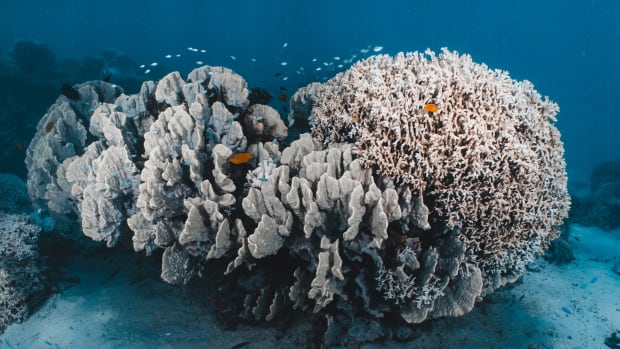
“It’s easy to look away from climate change if you aren’t confronted with it on a daily basis. In my research into the consequences of climate change for coral reefs, I’ve witnessed the mass bleaching of corals at close quarters over recent years. Over the past ten years, one thing has become very clear: if we don’t tackle climate change, we will lose the coral reefs.”
“Coral reefs are not just a personal concern for me. Half a billion people worldwide depend on coral reefs – for their livelihoods, for coastal protection against storms, or for income from tourism. Other ecosystems and crises are also linked to them, such as heatwaves, wildfires and floods. We are already being affected by climate change far more than most people realise.”
“Corals are on the front line of climate change; they are the ecosystems that are affected first. Coral is a key symbol of the climate crisis. Coral bleaching – the process whereby corals lose their colour and, in most cases, die due to rising sea temperatures – can convey the severity of the climate crisis in a very visual way.”
“Climate change is a global problem, which is why the most important thing is that we call for political change. The Climate March is a means to that end. I hope people realise how urgent the climate crisis is and that moving away from fossil fuels is better for us all. This year, that is particularly important, because the minority government has done little about the climate so far and can still make decisions before Prinsjesdag. That is why it is important to make it clear that many people care about this.”
On Saturday 12 September, the Climate March will start at 1.00 pm on Dam Square in Amsterdam.