Which UvA students will be crowned Dutch Student Champions this weekend?

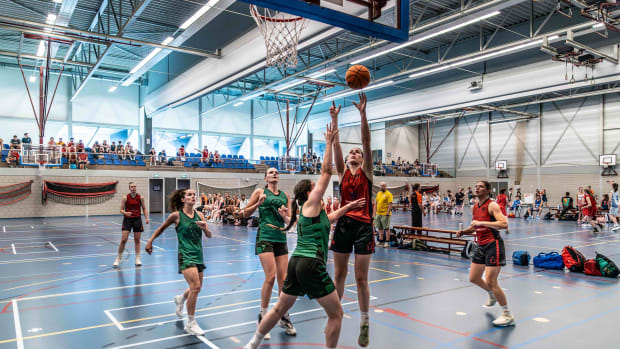
Exactly fifty years after its founding, Amsterdam’s USC has the honour of organising the annual Groot Nederlands Studenten Kampioenschap (GNSK). These three UvA students will be taking part in the multi-day sporting tournament this weekend, which features no fewer than thirteen different disciplines.

Bas Jansweijer (23)
Master’s student in Computer Science, will be competing in climbing at the GNSK.
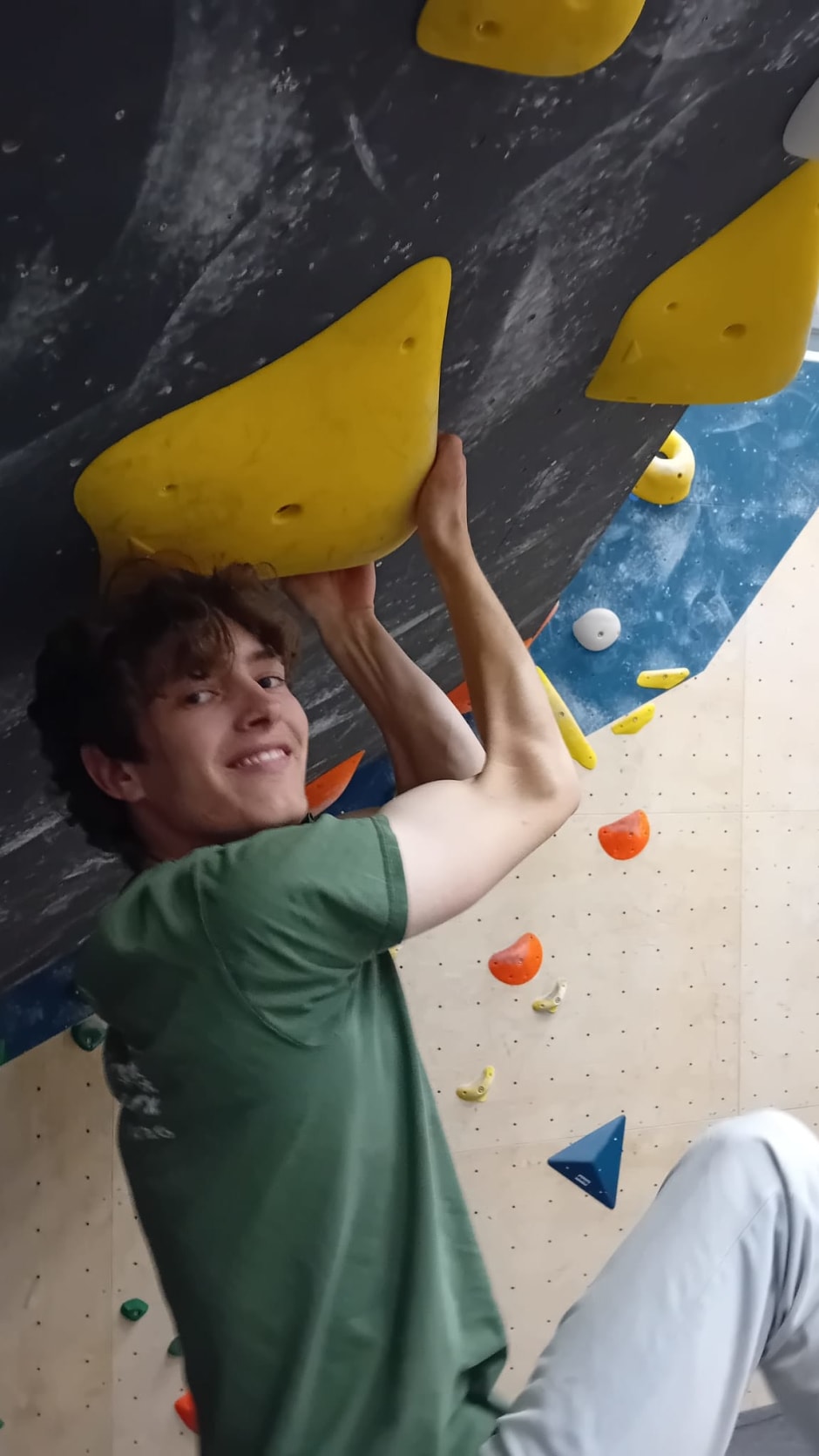
“Climbing and bouldering are combined at the GNSK, but I’m mainly a climber myself. With ropes, that is. It’s a bit like solving a puzzle, which really appeals to me. Figuring out how to make certain movements as efficiently as possible. Sometimes you start a route, look up and think: how am I ever supposed to get up there? Then it’s really satisfying when you manage it anyway.”
“I started three and a half years ago, when a friend and I went climbing at Science Park one day. I immediately knew I liked it, and over time I’ve become increasingly committed to it. Some climbers map out their entire route in advance, but I’m terrible at that. I rely much more on intuition. What I am quite good at, though, is hanging on to small, narrow holds. I’m fairly lightly built, which helps because there’s less weight to support.”
“I’m quite competitive by nature, even as a child I turned everything into a competition. I still do that in my head when I’m climbing, but it’s also a sport where you’re mainly competing against yourself. I actually like the fact that the competitive element is less prominent because of that. Still, there will of course be a ranking this weekend. Although I’m mainly planning to have a lot of fun, I think I’ll definitely feel the pressure on the day itself. I’ll want to perform well.”
Evelina Jokubauskaite (21)
Bachelor’s student in Economics and Business Economics, will be competing in fencing at the GNSK.
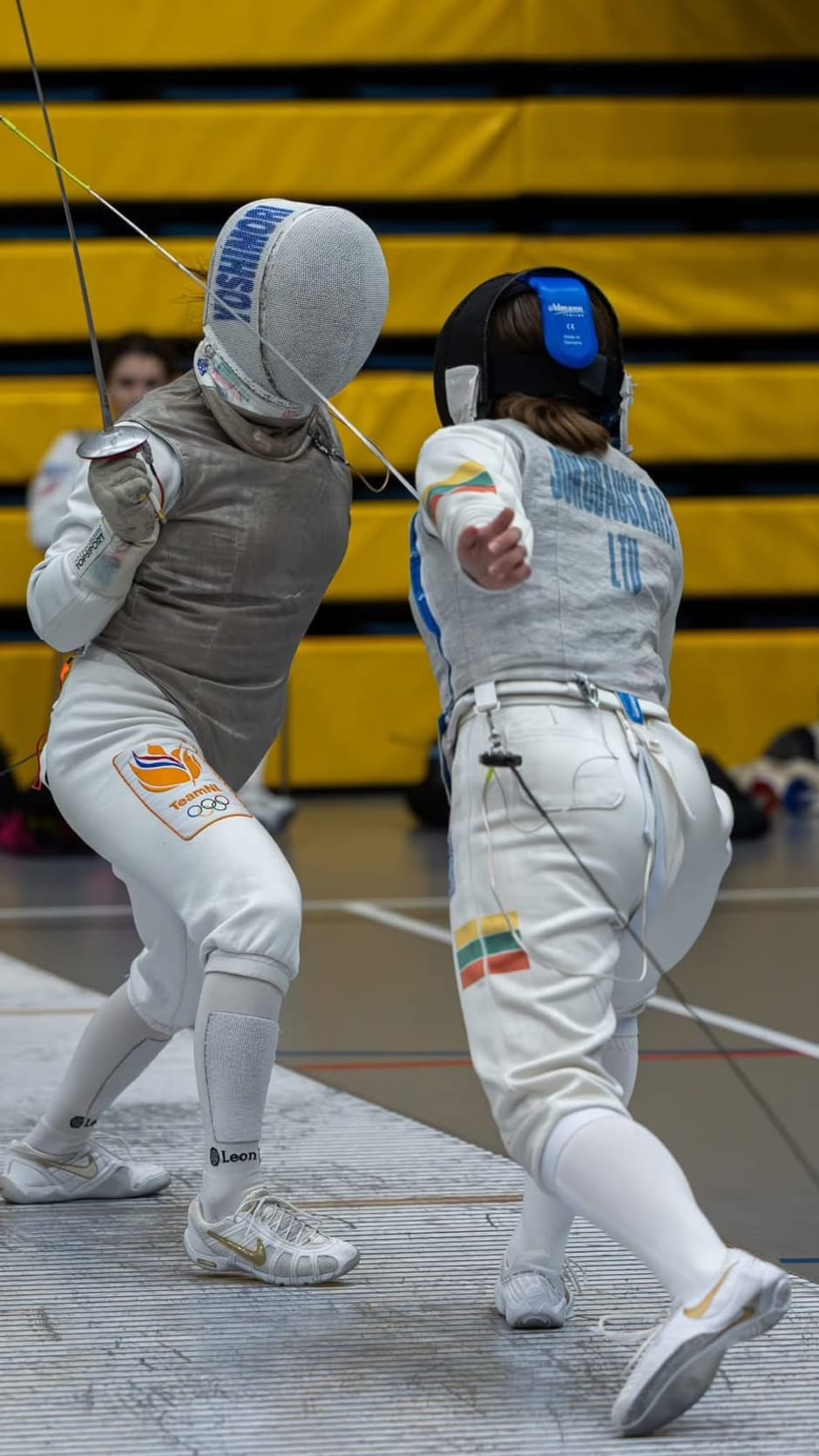
“What makes fencing truly unique is that, despite being spread all across the Netherlands, we form an incredibly close-knit community. Both beginners and professional fencers regularly come together to have barbecues or just grab a drink. Thar is why GNSK, where so many students with a shared passion gather every year, is always a very social event. It creates a really warm atmosphere. At the same time, fencing itself requires a lot of focus. Once you’re engaged in it, you’re no longer aware of what’s happening around you.”
“Fencing might be a bit niche, but most people still find it pretty cool when they hear how it actually works. Especially when I tell fellow students that I practise a sport where I get to stab people without any consequences, I usually get some fun reactions.”
“I only started fencing when I moved from Lithuania to Amsterdam for my studies, but I think I’m pretty good for a beginner.”
This year marks the 66th edition of the GNSK. In total, more than two thousand athletes, coaches and volunteers are involved in the event, which takes place on 5, 6 and 7 June. Winners are allowed to call themselves Dutch Student Champions for a year, and the city with the highest overall score in the general ranking is awarded the title Student Sports City 2026. That honour went to Nijmegen last year.
“I’m not sure whether fencing should just remain a hobby, or whether I want to fully commit to it and see how far I can go. Lately, the latter option seems to be winning out, partly because there are no other women in Lithuania competing in my specific fencing category. That gives me a fairly unique opportunity to take part in international tournaments. But the Olympic Games? No, I wouldn’t immediately call those my end goal. I’m not sure I’ve got the right character for that.”
Vyaan Shah (23)
Bachelor’s student in Liberal Arts and Sciences, will be competing in squash at the GNSK.
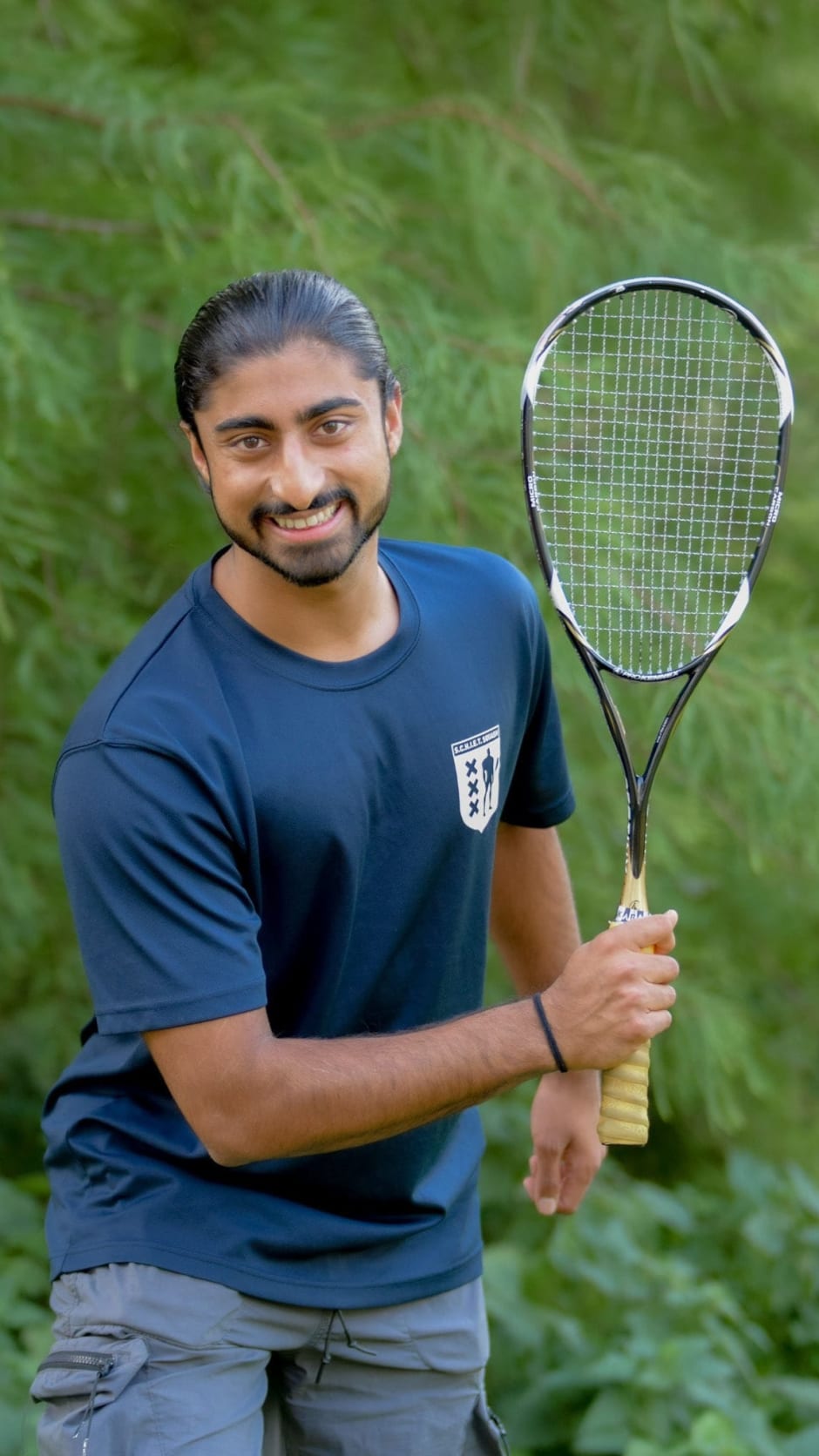
“I was four years old when my father first took me to the squash court in London, the city where I grew up. After playing there for about ten years, I stopped for a while, but I picked squash up again when I moved to Amsterdam.”
“Squash is extremely intense. It is even said that, especially at the top level, it is the most intense sport there is. You not only have to be physically capable of striking the ball very hard, but you are also constantly thinking at high speed. You have to read the game, see where your opponent is struggling, and respond accordingly, for example by slowing the game down. I’m quite good at that part of the sport. But my weaknesses? I’d rather not say too much about those, as it might become a problem if an opponent reads this.”
“Sport and study go hand in hand for me. Being able to study well is easier if I’ve been physically active first. During squash your heart really gets pumping, but that actually makes me extra focused when I study afterwards. It’s nice to have that mental balance, because when you’re playing squash you really aren’t thinking about anything else.”