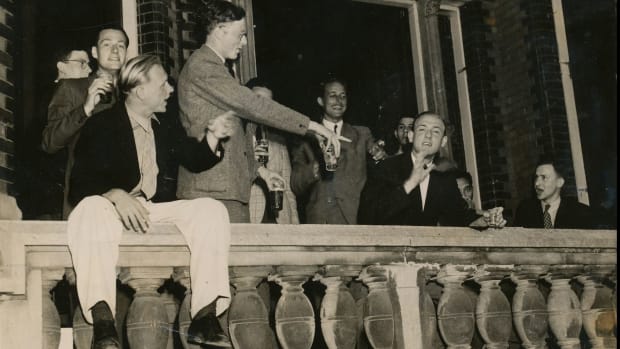
ASC fraternity showed it was possible “to say no to the Germans” by disbanning in 1941

On 4 May, we reflect on the war years. The dissolution of the Amsterdam student corps in 1941 shows that students took the lead in the resistance against the German occupiers. “Even the Germans noticed that.”
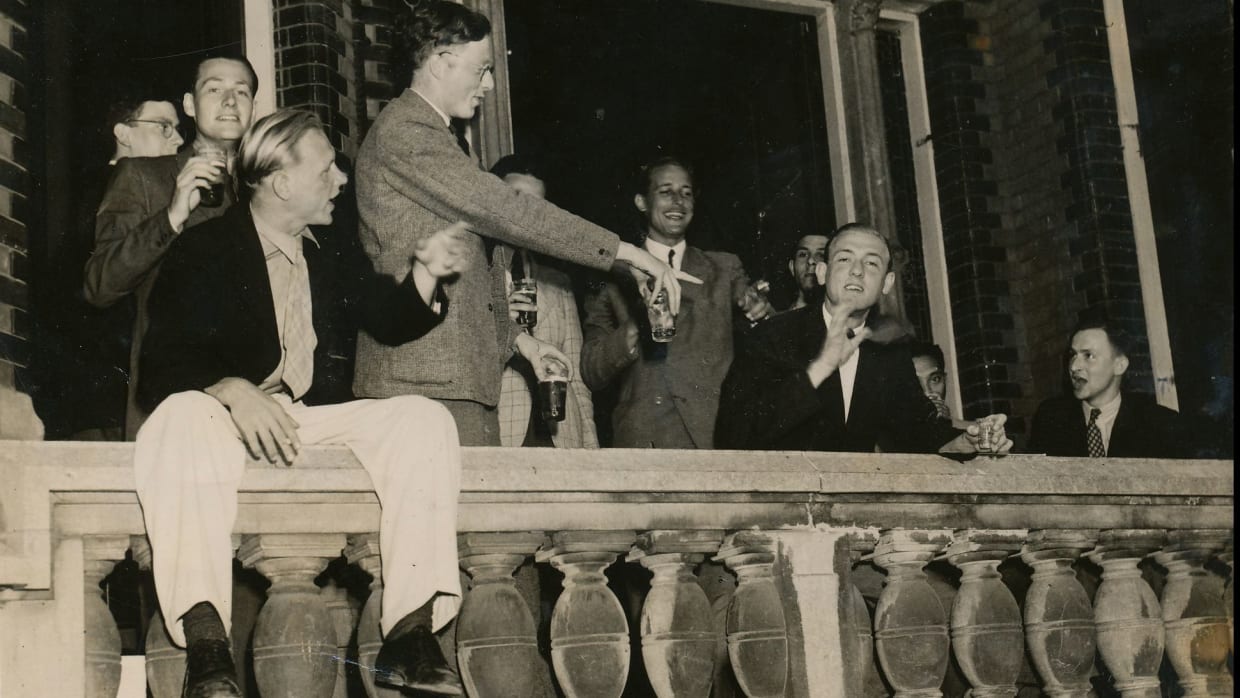
This year 85 years have passed since ASC and AVSV (which were then two separate student associations) temporarily dissolved themselves. They were no longer permitted to admit Jewish students. “The exclusion of Jewish students was such a gross violation of Dutch values that the student association felt compelled to disband,” says Jasmijn Fernandes, a current board member at ASC/AVSV. “This is still considered a defining moment in the association’s history.”
Prior to the German occupation, the student association had not spoken out strongly against German National Socialism, but with its dissolution in 1941, they took a clear stand. “In Amsterdam, they were among the first and the most outspoken,” explains Jeroen Kemperman, a researcher at the NIOD. In 2018, he wrote a book about student resistance during World War II.
Leading the resistence?
The association itself declared that in Amsterdam, they were “the most important resistance against the Germans.” This is written in the book Geschiedenis van het Amsterdams Studentenleven 1932–1962 (History of Amsterdam student life, ed.), which the ASC published in 1962. “They believed they played a leading role in the Amsterdam student resistance,” Kemperman confirms. “There is some truth in that. Other associations followed their example. The ASC’s moral stance inspired other associations in the Netherlands to rise up as well.”
In Leiden and Delft, strikes and student protests had already broken out a year earlier. In Amsterdam, the mood at that time was “less resolute.” But when the occupying forces took measures in those student cities, that leading role fell to Amsterdam. “Leiden and Delft were more or less eliminated by then. In Leiden, students were already banned from attending classes,” Kemperman explains. Resistance within the framework of the educational institutions had emerged earlier, but the dissolution of the ASC and AVSV in Amsterdam marked a turning point for the student resistance. “The associations began to realize that nothing could be achieved using old-fashioned methods.”
Little solidarity
On October 28, 1941, the association convened for “the big dissolution meeting.” By a clear majority, it was decided to dissolve the association. Afterward, alcohol flowed freely and property was destroyed. “The piano must not fall into German hands,” the ASC wrote in its history book.
David Cohen, the chairman of the Jewish Council of Amsterdam, feared the negative consequences that the dissolution could have for the Jewish members. Prior to the decision, he spoke with the senate and asked them to reconsider. The request was ignored.
The dissolution cannot be seen as a clear form of solidarity with the Jewish members, Kemperman argues. “It was about the self-image of the student organizations. They felt they had the right to determine who could become a member. It was more a collective expression of aversion to German interference than an attempt to avert the tragic fate of their Jewish fellow students.” According to him, the association did little for its Jewish members, such as organizing fundraisers. Whatever the motivation, the student association served as a role model and “showed that you could indeed say no to the Germans.” The student resistance was essential in inspiring society and providing “a moral boost,” says Kemperman.
Not all associations made the same choice as the ASC and AVSV. Kemperman: “Most associations dissolved themselves in 1941, but a number continued to exist in a sort of dormant state.”
Activism is typical for students
After 1941, the association continued unofficially. The friendships, fraternities, and bonds of trust that characterized student life served as a catalyst for the student resistance. Kemperman: “If a student wanted to join the resistance, they logically often started with a fellow student. You looked for people you trusted.” People in hiding were housed in association houses; members collected identity cards and helped smuggle weapons. And the female members of AVSV were regularly deployed as couriers. “They could move about more freely back then,” says Fernandes.
Public resistance gave way to underground actions. Students played a major role in the “illegal resistance.” It was dangerous to join the resistance, says Kemperman. “You really had to be cut out for it. It’s remarkable that it was precisely the students who dared to speak out. The Germans noticed that too.”
So why were it precisely the students who spoke up? “You still see today that much activism comes from students,” says Kemperman. “They aren’t yet deeply embedded in society, don’t have major responsibilities, and don’t have a family or position to protect. Every situation is different, but students can often act more freely and autonomously.”
According to Fernandes, this hasn’t changed at the ASC/AVSV. “The association encourages social engagement among its members. The underlying principle remains the same: you must take responsibility in society.”