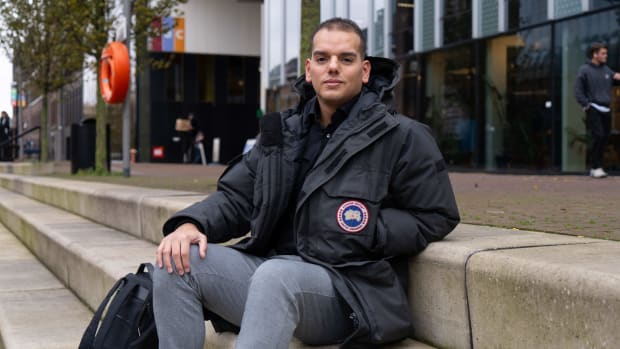
Palestinian student Tariq Abu Khalefa: "I was afraid I would blackout"

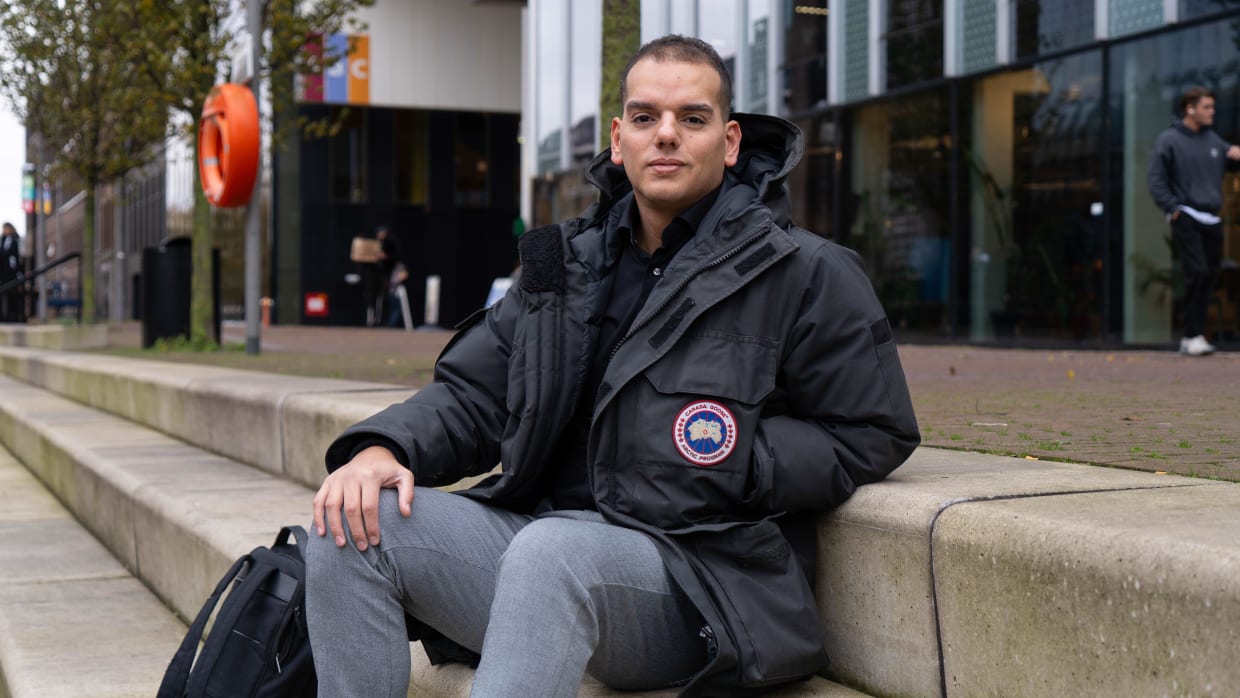
Master’s student in Private Law Tariq Abu Khalefa (33) fell into a months-long depression after 7 October 2023. In an instant, the world of the UvA student with Palestinian roots was turned completely upside down, both personally and at the university. Yet even during his studies, he managed to lay the foundations for a career in law.
A few weeks ago, the UvA announced that it would cut all remaining ties with Israel. What went through your mind when you heard that?
“I had mixed feelings about it, because it only happened a few weeks ago, while what’s happening there has been going on for a very long time. And I don’t even necessarily mean since 7 October, but long before that. Children being killed, people being abducted. I’m glad the UvA has finally taken this step, and I understand that these things take time, but it stayed silent for far too long. For a long time, no one was looking in that direction. It’s very good that it has finally happened, but it came far too late.”
How have you experienced the past few years at the UvA?
“It’s been really tough. It’s an incredibly charged subject for me to talk about, so I don’t do that easily, but it truly was a very difficult time. I have contacts in Palestine; acquaintances and friends. They sent me images and messages, that was hard to process. I still get emotional when I talk about it.”
“The demonstrations at the UvA were a bright spot for me. I saw that many people were starting to understand, and were standing up for Palestinians. I honestly hadn’t expected that. I didn’t know the UvA that well, and I tend to keep to myself, but when I saw those protests it gave me a warm feeling. Not only at the UvA, by the way, but across Amsterdam. I saw people standing up for Palestinians and speaking out for them. That meant a lot to me.”
And what about the university’s stance?
“That was difficult for me. I felt misunderstood. The images I was receiving were deeply distressing. From a university that stands for justice, I expected more. Although I must say that the lecturers in class showed a great deal of understanding. It seemed like they had a completely different view from the board. They understood what was really happening there and could see the bigger picture.”
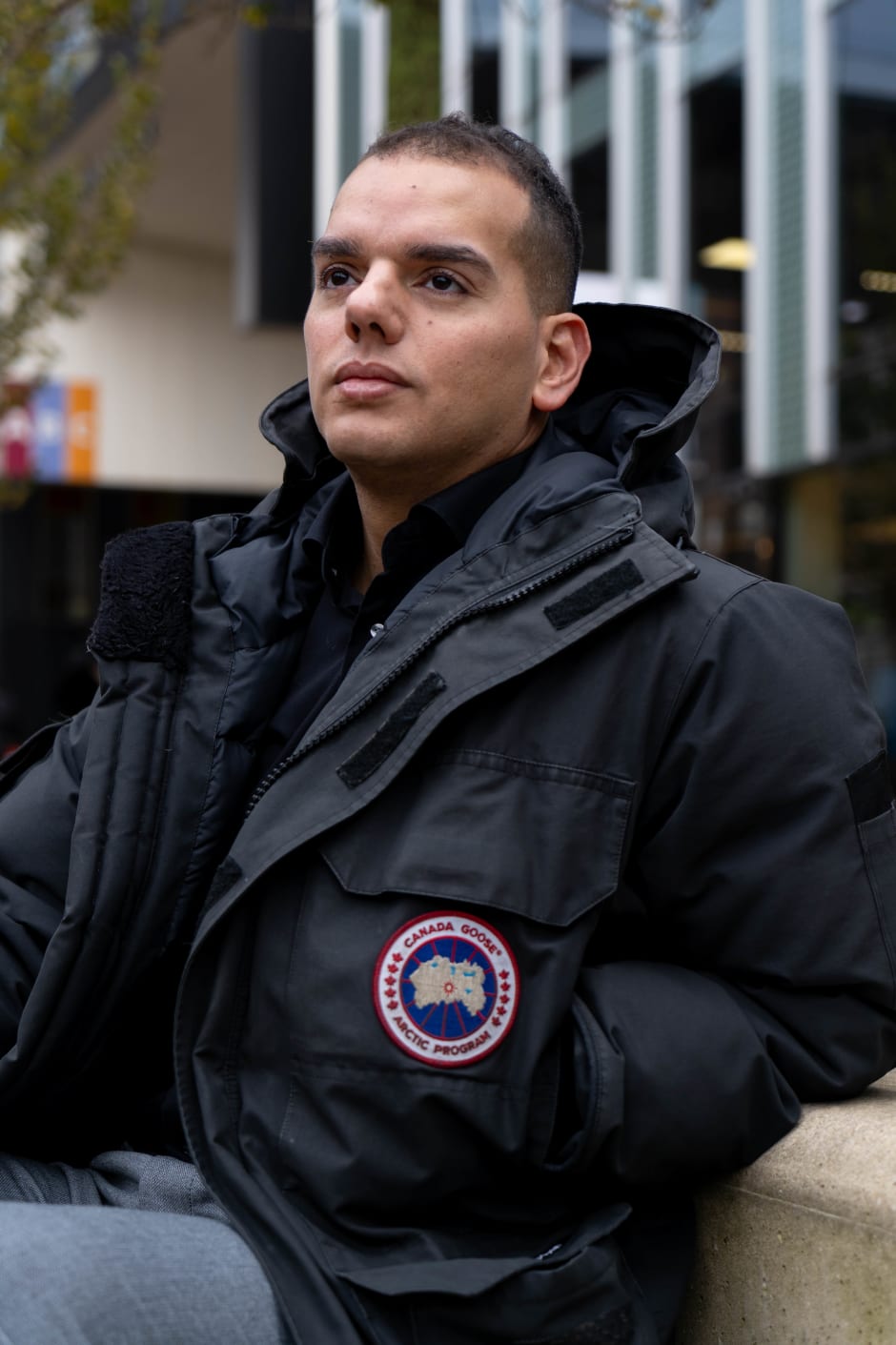
Tariq Abu Khalefa was born in Russia, where his Palestinian parents ended up in the early 1990s after fleeing their homeland via Iraq. In 2003, at the age of eleven, he and his family moved to the Netherlands, where his father found work as an engineer. Although many relatives, like his parents, have since been forced to leave Palestine, Abu Khalefa still maintains close contacts in Gaza. Several of them have lost their lives in recent years during bombings. He is visibly affected while talking about this.
You mentioned that you’re not the most talkative person when it comes to sensitive subjects. Why did you decide to agree to this interview?
“I wanted to share this story at least once. I’m very glad about what students at the university have already achieved, and by taking part in this, I hope to help create some understanding as well.”
Have you taken part in any of the demonstrations yourself?
“Not really. I wasn’t directly involved, but I did see them. I was too caught up in the situation itself. People I was in touch with on WhatsApp sent me images, and that affected me deeply. If I’d be going to demonstrations as well, I was afraid I would blackout. I also struggled with depression for quite some time, for four or five months after 7 October, I could barely get out of bed. I just couldn’t bear to witness it anymore. But the fact that those demonstrations took place gave me a sense of peace, the feeling that you’re not alone.”
“At a certain point, I also stopped focusing so much on what the UvA was or wasn’t doing. It became too hard to keep track of every detail. For my own protection, I tried to keep some distance from it all.”
How do you view the Jewish students who, amid all the demonstrations, say they feel unsafe at the university?
“I can understand that someone might feel unsafe when they see a large crowd. Personally, I haven’t witnessed any specific moments where they were harassed. But of course, they should also feel safe on campus, that’s only logical to me. Jewish students should not be attacked by anyone, not by Palestinian protesters or anyone else. I want to be treated with respect and dignity myself, and I wish the same for others.”
Abu Khalefa – who lives in Beverwijk with his wife and two children, aged six and eight – began his long educational journey years ago at a vocational college. From there, he worked his way up through a university of applied sciences and eventually to the University of Amsterdam, where he started his bachelor’s degree in law in 2021. He completed it last summer and has since begun a master’s in Private Law. In the meantime, he has already gained plenty of work experience. As a legal specialist in personal injury, he handled numerous cases while still studying.
A young family, a demanding job, an intensive degree, and such a difficult personal period. Was it ever hard to combine all that?
“It wasn’t an easy time. I had to push through it more than once. The children are getting more energetic, studying keeps getting harder, and then there’s work on top of that. But I just wanted to do it. I enjoyed the programme, and that helped.”
Alongside your master’s in Private Law, you’ve already been working as a jurist for years. How did that come about?
“When my cousin was hit by a bus, she couldn’t reach a settlement with the insurance company. That inspired me. I saw that large insurers and corporations were taking advantage of victims. With the legal knowledge I gained during my studies, I began to notice that certain things didn’t add up. That’s how I got started, writing letters, gaining experience. By now, I’ve handled quite a few major cases. I want to continue specialising. Becoming a lawyer is ultimately my goal.”
Do you think that, as a jurist with Palestinian roots, you view what’s been happening in Gaza through a particular lens?
“Yes. You look at it differently. What I don’t understand, for instance, is that there are so many international treaties meant to protect people, yet they’re not being fully applied. Right now, it’s the law of the strongest that prevails. That goes against any sense of justice.”
“I think I’ve become more outspoken about justice lately. I apply that in my work. I want to stand up for the vulnerable, to help people who don’t know their rights. Of course, personal injury cases can’t be compared to what’s happening in Gaza, but the link I do see is that I want to stand up for the weaker party.”