Rapper Faberyayo made his breakthrough during his student days at UvA

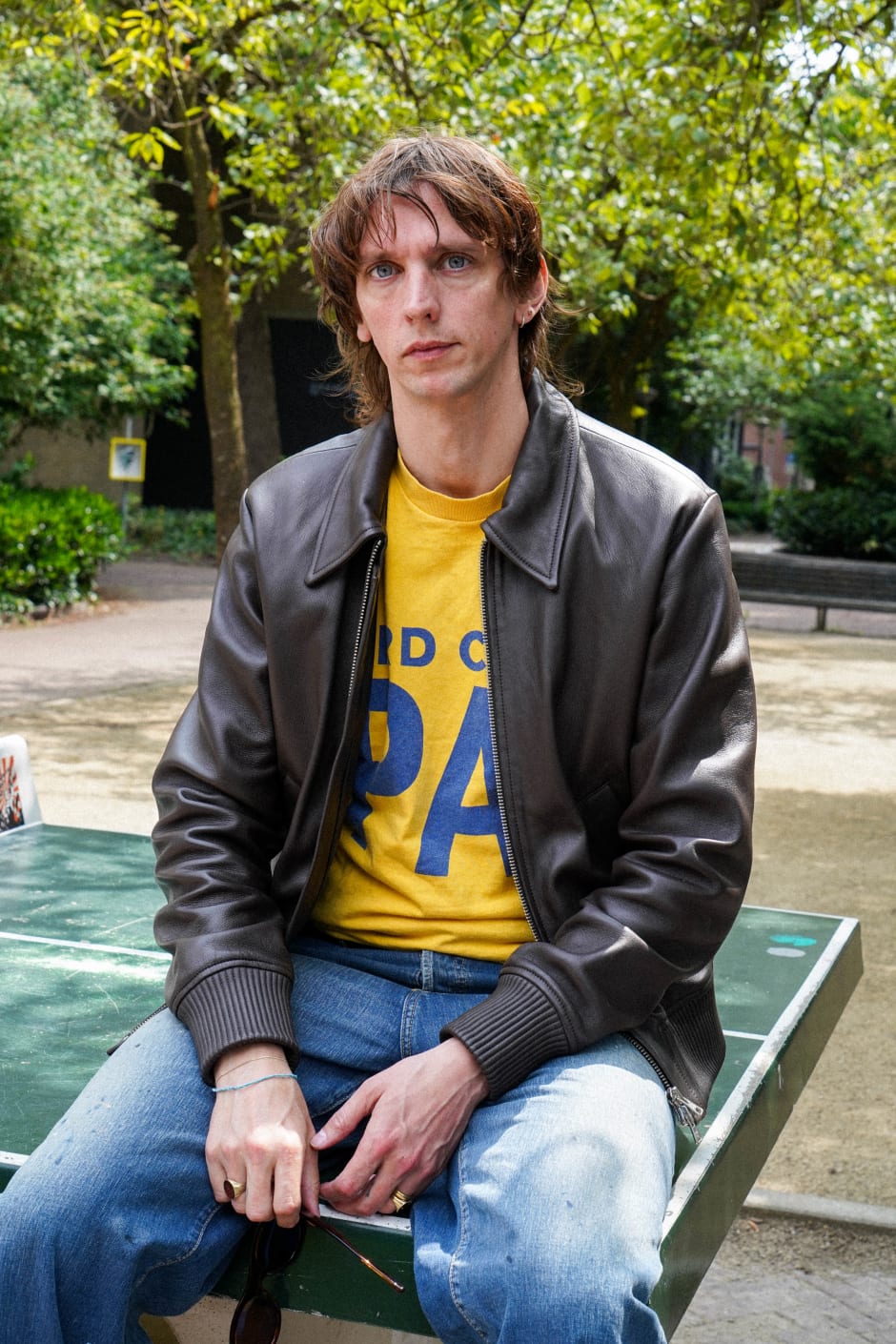
Rapper and writer Pepijn Lanen – better known as Faberyayo from rap group De Jeugd van Tegenwoordig – was a student at the UvA when, twenty years ago, he scored a number one hit out of nowhere with Watskeburt. He tells Folia about his student days and what it means to be a true Amsterdammer: “On the day I moved to Amsterdam, I immediately jumped into the IJ.”

You grew up in Utrecht. When did you realise that you didn’t want to stay there after secondary school?
“My brother moved to Amsterdam after graduating from secondary school. I think I was about ten when I asked him why he didn’t stay in Utrecht. He said that he felt he had seen every pavement in Utrecht. So I thought, then I have to go to Amsterdam too. My brother rented a room near Surinameplein, where I often stayed. At that time, I felt that Amsterdam was the place where everything happened. That’s where I had to go.”
What was Amsterdam like when you arrived there at the age of nineteen?
“The city was a lot more chaotic than it is now. They had just started building the North/South metro line, which was causing a lot of commotion. Not only was it expensive, but it was also going to take fourteen years to complete, which I think people found very difficult to comprehend. Everything was also a bit smaller than it is now. There were fewer places to go, mostly in the city centre. Noord, for example, was not a destination at all, unlike today.
“The first room I ended up in was on a houseboat, where the Haarlemmer Houttuinen are now. On the day I moved in, I had to jump into the IJ because all my stuff had fallen into the water. A crate of vinyl, for example. The covers were ruined, but luckily the records survived.”
You were studying law and European studies at the UvA at the time, but you decided to drop out fairly quickly. Why was that?
“After my final exams, I travelled abroad for a long time and worked in an office for a while to save money. It felt like enormous freedom after seven years of secondary school. After a few weeks at university, I already felt like, ‘I’m doing this again.’ Assignments, reading texts. Some things I found quite interesting, but a lot of it I didn’t. It only worked if I put a lot of time into it, but I was too busy with other things.”
When did you make the decision?
“When it turned out that it was impossible to combine with the start of De Jeugd. At that point, I had almost completed my first year and had already started my second. I found the subject I was studying quite interesting, but the seminars were on Friday mornings, and on Thursdays I was often exhausted or we had a show. That meant I couldn’t take the exams either. I was fine with that; music was what I wanted to do. To make my mother happy, I wanted to finish my first year, which meant I had to retake one course. To do that, I finished a paper backstage at Jörgen Raymann’s television show at the end of the year.”
You still live in Amsterdam. In the more than twenty years since then, have you come to feel like a true Amsterdammer?
“I find that very difficult; I think you have to be born here to feel that way. I will always be a warmly welcomed guest, but if I called myself a true Amsterdammer, I would feel like a fraud. At the same time, I don’t know any better and I’m not an outsider. I sometimes visit my parents in Utrecht, but I have no reason to be there anymore; I no longer have a right to be there. Ultimately, being an Amsterdammer isn’t just one thing, but a patchwork of people from all walks of life. You could say that the real Amsterdammer lives in Purmerend. The working-class neighbourhoods are, of course, no longer what they used to be.”
Which song you’ve written best reflects your life in Amsterdam?
“I think most of De Jeugd’s music is about life as the four of us experience it here. They are observations about people, going out and our daily life in Amsterdam. For example, the song ‘Een Barkie’ is about going out on Leidseplein. Withdrawing a hundred euros to have a fantastic evening without thinking about the consequences. That really comes from our own experience in the city.”

What is it like raising young children in Amsterdam?
“That’s a good question... I’m not really sure yet. They’re still young: the oldest is ten and the youngest is just two, so they’re mostly at home or at school. But I did cycle through De 9 Straatjes with my ten-year-old son once, and there were so many tourists there. Then we cycled across Dam Square and Spuistraat. I thought to myself: how do my children actually connect to this place?”
Do you ever consider leaving?
“I don’t want to leave, and of course they don’t know any better, but I do sometimes wonder what leaving would do for them. On the other hand, I wanted to come here because of the opportunities, which are still here. So I hope that my children will enjoy living in Amsterdam. If they want to study architecture later on, they can always go to Delft.”
As part of De Jeugd van Tegenwoordig, Pepijn Lanen will be performing at the Ziggo Dome on 2, 3 and 4 October. Tickets are still available at djvt.nl.