Essay on student protests: ‘Adults have something to lose, young people have something to win’

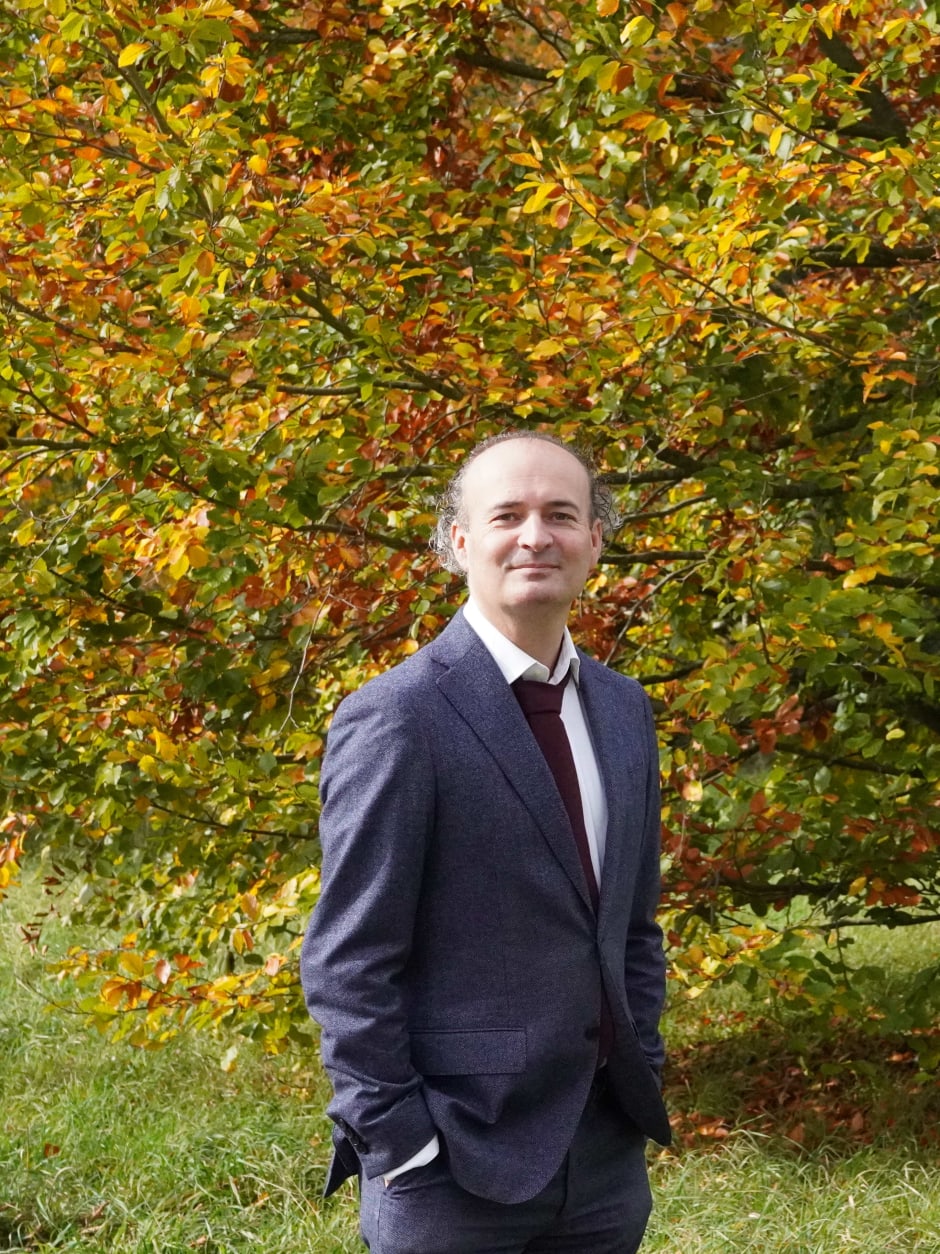
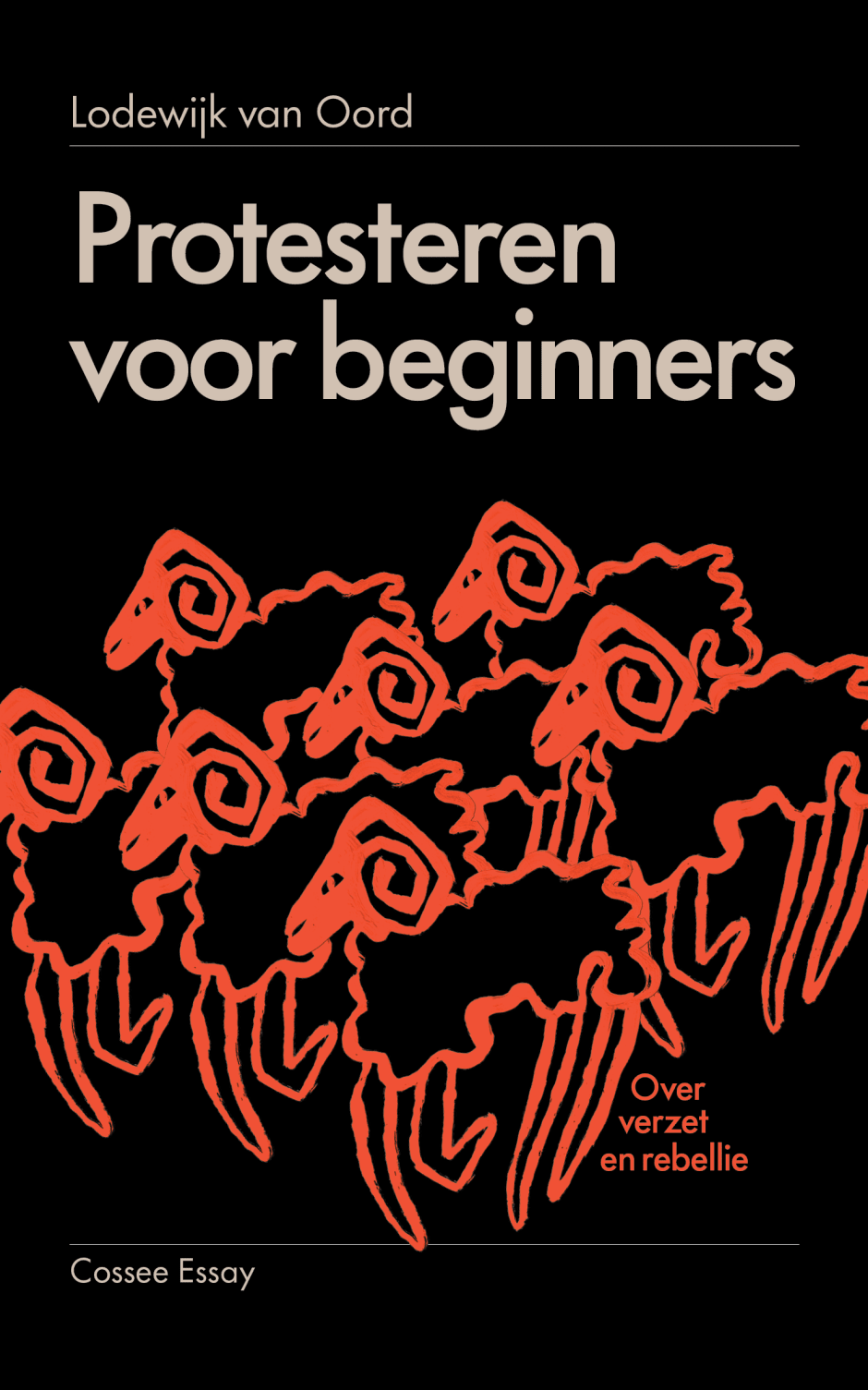
The recent student protests against Israeli violence in the Gaza Strip prompted Lodewijk van Oord to write the book Protesteren voor beginners (Protesting for Beginners). Young people are taking to the streets more and more often, he observes. “Young students who are protesting for the first time and are not yet seasoned in the art of protesting often do not yet have the discipline to remain non-violent.”

The student protests in the spring of 2024 in the United States and Europe were the reason for historian Lodewijk van Oord to write the book Protesting for beginners. People are taking to the streets more and more often: in Amsterdam alone, more than two thousand demonstrations were registered with the municipality in 2024, writes Van Oord: double the amount in the span of ten years.
Why were you so interested in the student protests?
“I have taught conflict studies and the history of the Middle East for many years. So during the protests, which began a year ago, these aspects of my background came together. The demonstrations began in America and spread to the rest of the world, including the Netherlands.”
“I decided to document what was happening. What does this newspaper say, what does that newspaper say? How is it developing? Are the demonstrators holding up, is it having an effect? I kept an eye on the protests in America, Europe and Amsterdam and wrote opinion pieces about them over the summer. That's what this book has grown out of.”
Did you see a difference in the reporting?
“I looked at what the national newspapers, the city newspapers and the university newspapers wrote in cities such as Dublin, New York, Chicago, Amsterdam, Nijmegen and Utrecht. I noticed that the university newspapers interviewed the students much more often: what are you doing here, why are you so angry? Het Parool, on the other hand, placed more emphasis on the mayor, while NRC and de Volkskrant focused on the Second Chamber. The established press tends to look at the conflict from an administrative perspective. I noticed this in Utrecht and Nijmegen, as well as in Dublin and at the Columbia Spectator in New York.”
Your book also covers the student protests against apartheid in South Africa. Why do students often play such a major role in protests?
“Research shows that young people are more likely to demonstrate than older people. I think this is because your interests shift as you get older. Young people are at a stage in their lives where they are thinking about who they are, what they can do and what the world is like. But also: what kind of world do I actually want to live in?”
“In addition, they come into contact with current affairs during their studies, through lectures, debates, readings and student associations. This generation realizes that they were born into a world where international cooperation and a strong constitutional state, which were the norm for a long time, are now crumbling. There is a kind of strange tension in the fact that human rights and geopolitics are discussed in lectures and that the university teaches students certain values, but the board itself does not act according to these values. That gives a certain feeling of schizophrenia, after which the step to the street is quickly taken. Climate activism is a way to do something about the concerns. But the erosion of the international legal order, of which Gaza is a good example, also touches young people and they want to fight it.”
“When you are an adult with a permanent contract, a mortgage and a few shares, the barriers to taking to the streets and taking a risk are greater. In short: young people have something to gain, adults have something to lose.”
Another sit-in will take place on Friday at 16:30 in the ABC building on the Roeterseiland campus. According to the Instagram account Amsterdam Encampment, the UvA presents itself as ‘open, progressive and critical’, but this is not true according to them. “The UvA cannot claim to be a decolonial university while supporting the colonial genocide in Palestine,” the Instagram account states.
In every ‘major protest movement’, there is always a ‘hidden generational conflict’, you write. What do you mean by this?
“First of all, I am not trivializing the matter. I am convinced that students are primarily taking to the streets because they find the genocide in Gaza an ugly sight. What I mean is that it is a redefinition of power from one generation to the next. A younger generation is indirectly saying, with a protest, that we are coming. We do not have power yet, but with our protest we are showing the kind of world we want to live in. For example, in terms of the climate: we want to live in a sustainable world. When it comes to the rule of law, we want to live in a free, just world.”
You write: “Karl Marx is quoted as saying that history always repeats itself, first as tragedy, then as farce.” But that does not apply to the student protests, you write, as the two theatrical forms merge. Explain.
“The protests are a serious, grave matter. But if you look at them a little more closely, they are also somewhat comical. UvA rector Peter-Paul Verbeek who went on Nieuwsuur to say that he had no idea with whom he had negotiated because of the face coverings. But also that students organize teach-ins during the times when they should actually be attending lectures. These are elements that I experience as comical, because reality is turning upside down. As far as I am concerned, humor and anger go very well together. My advice to the protesting students is therefore: try to cultivate humor as well, in order to keep up the demonstrations.”
Do they have that sense of humor too?
“I have spoken with many students and noticed that it is all pretty serious. I asked them if they also have fun with each other. But I have the idea that they mainly carry the suffering of the world on their shoulders, which is very understandable. But if you want to keep up such a protest, you also have to be able to put things into perspective and be more businesslike. It is better to be a little less emotional and a little more strategic to ensure that you have the greatest influence on the situation. That means that sometimes you do protest, and sometimes you don’t.”
You advocate for the “monopoly on violence to be used with radical restraint, especially when it comes to young people who have not yet had much experience in their role as protesters”. Why?
“We know from research that violence has an epidemic quality. In other words, once violence has been used, it always leads to more violence. This is especially true for young students who are protesting for the first time and are not yet battle-hardened. They often do not yet have the discipline to act non-violently. Because non-violence is something you have to become a professional at. That is difficult, it is easier to become violent.”
“If you peel back the situation in Amsterdam, you see that the first choice of violence was from the triangle. They decided to evict the first occupation with violence, with that big shovel. That led to violence among the demonstrators. Of course everyone is responsible for their own violent behavior. But I also believe that the party that is the first to use violence is partly responsible for the counter-violence that follows.”
Non-violence is a major theme in your essay. Yet recently two students were convicted of violence during the UvA demonstrations.
“You may wonder what violence is: for some, it is only injury to living creatures. But I go further: destruction and sabotage, such as taking street signs out of the ground or breaking windows, are also violence in my view. So you shouldn’t do that either. I am critical of that: strategically, it is of no use whatsoever. Someone like Gandhi said: with the smallest amount of violence you collaborate with the system you are fighting against. But still: the first violence came from the riot police, and the reoccupation of the city center was the result of that. As I say: violence is epidemic.”