A prayer, a word of thanks or a letter: gratitude makes you feel better about yourself

Regularly expressing gratitude is said to help people feel stronger in life, become more mentally resilient and experience more contentment. Is this indeed the panacea for gloom or is it yet another obligation for your endless to-do list?

Gratitude is booming. If you walk into a bookshop today, you will see an array of self-help books and magazines focused on spirituality and gratitude in addition to the usual books and magazines. In addition, you can buy your journals-the gratitude journals. Outside bookstores, health insurance companies offer courses and apps, and the popular meditation app Headspace, with millions of downloads worldwide, even has its own Netflix series. Reflecting on what you have and being grateful for it is said to be the key to a happier life. But what does gratitude really mean? Does it indeed help you to be more positive in life? And how do you do it?

Positive Psychology
Gratitude has an age-old tradition in various wisdom traditions, philosophies and religions. In Christianity, Islam and Buddhism alone, billions of people derive strength from expressing gratitude in the form of recitation or prayer. Today, gratitude is also an important pillar in positive psychology, says Levi van Dam, associate professor of Resilient Growing up at the UvA. The term was introduced in 1999 by US psychologist Martin Seligman. “He thought that psychology should not only focus on mental complaints,” Van Dam says, “but also on what makes people happy. Gratitude is an essential part of that.”
Research shows that gratitude is an important predictor of satisfaction and positive feelings. “People who are grateful for what they have and regularly reflect on it and express it to others generally feel better, sleep better and perform better,” says Van Dam. In addition, brain regions involved in reward, moral cognition and emotion regulation are activated more once people experience more gratitude.
Before bed
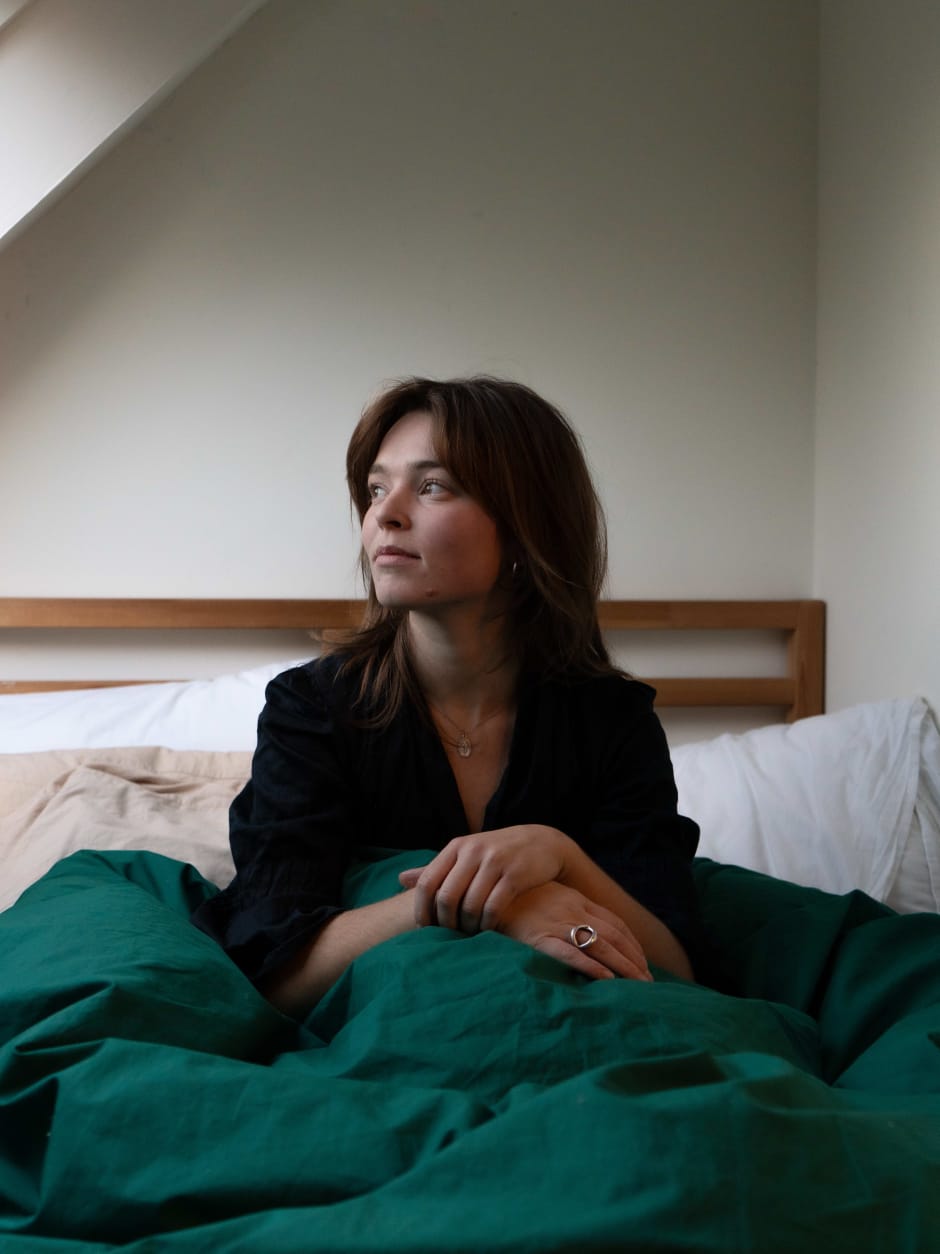
But how do you do that, be grateful? Law student Victoria Dreijer (21) reflects daily on people and events she is grateful for. This habit stems from her religious upbringing. “I still go to church in Amsterdam or Haarlem. Being grateful to God naturally plays a big role there, only at the moment I don’t know whether I go to church for faith or for personal reflection.”
Dreijer especially likes the fixed moments of reflection. This is not only (almost) weekly in church, but also has a daily content. “Before every meal, I do a short prayer; my mother rammed that in well, haha. I don’t say it out loud then, but in my head: ‘Thank you for the food, my health, friends, family, safety and the roof over my head.’ Who I address is not important, but I like to address something or someone in it. I also regularly take a moment just before going to bed. Especially last year, with a lot of news about wars in Ukraine and Palestine, and elections at home and abroad. At such moments, I put my phone away, close my eyes and actively reflect on my day. This helps me take a moment to reflect on how things are and how I feel about them. I also actively try to put myself in other people’s shoes, and then I realise very strongly what a good life I have. Without those moments, I think life goes by too quickly. It helps me to be more mentally resilient to the not so nice things in life.”
Half marathon
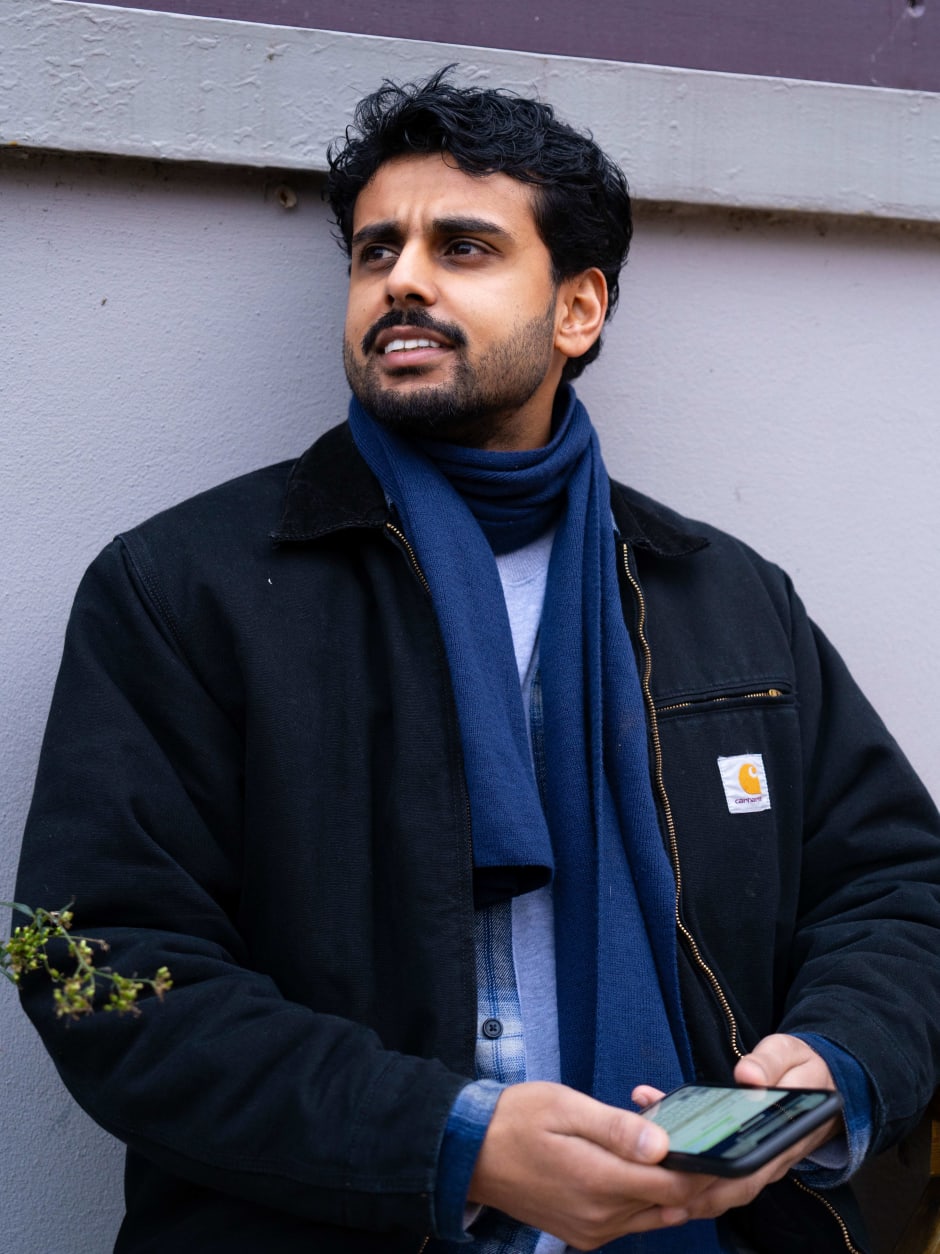
Tushar Sharma (20), a Media and Culture student, takes a different approach. He regularly writes messages to people who have meant a lot to him. “When I look at where I am now, I know that it wouldn’t have been possible without certain people who have played a role in my life. The other day, for example, I ran a half-marathon with one of my best friends. Without him, it would never have been possible. A few days later, I sent him an extended message reflecting on the time we trained together towards the marathon and how grateful I am that it succeeded.”
For Sharma, expressing gratitude in this way is something that strengthens his relationships. “It gives me a sense of stability and helps me pause in an already busy life. My life has had many ups and downs. I moved out of Amsterdam a while ago because things didn’t go well for a while - too many struggles. Now I live with my father in Utrecht. I’m grateful that that’s possible.”
Yet expressing gratitude is not a solution for everyone. “There are people who struggle with fears and insecurities, such as climate anxiety or the lack of a home or permanent job,” says Van Dam. “If you don’t feel grateful for anything, these worries can feel overwhelming. That doesn’t mean we should ignore these problems. But psychology teaches us that paying attention to the positive helps: everything you give attention to grows. So also the positive.”
Areligious initiatives
Van Dam is searching for how gratitude can take firm shape in society outside the religious context. “Of course, you yourself can do a lot to reflect, such as naming or writing down three positive aspects of your life every day and writing a letter of thanks to someone who has meant a lot to you. But I think there is also a need for social initiatives.”
The School of Life in Amsterdam, by British philosopher Alain de Botton, is one such initiative. “It’s a kind of areligious church where people talk to each other about big life questions, without any conversion urges,” says Van Dam. “Or think of Sanctum, an Amsterdam initiative that is now going global, where dance and movement combined with mental health are central. That is also about being grateful for yourself and the people around you.”
Van Dam himself came up with the mental car wash: a gym for mental activities such as breathing and singing bowl sessions and an ice bath. “It’s something you can go to with friends because it’s fun and exciting. It is part of your leisure experience, and not something you have to do for work or study, for example. Through different activities, we make people dwell in the now, with themselves. Hopefully, they come out a little refreshed mentally.”
Mirror
For people who want to start with gratitude, Van Dam has another tip: “For a week, try doing five conscious breaths (five counts in, five counts out) in the morning or evening and finish by naming something you are grateful for. 1...2...3...4...5...Do this in front of a mirror if necessary, as speaking out loud to yourself can be powerful. If necessary, combine it with daily routines, such as brushing your teeth or applying your day cream, and use that moment to become aware of yourself and what you have achieved. The result? You start to feel more satisfied. It brings some awareness... it’s all not so bad. It’s a beautiful life, a beautiful moment.”